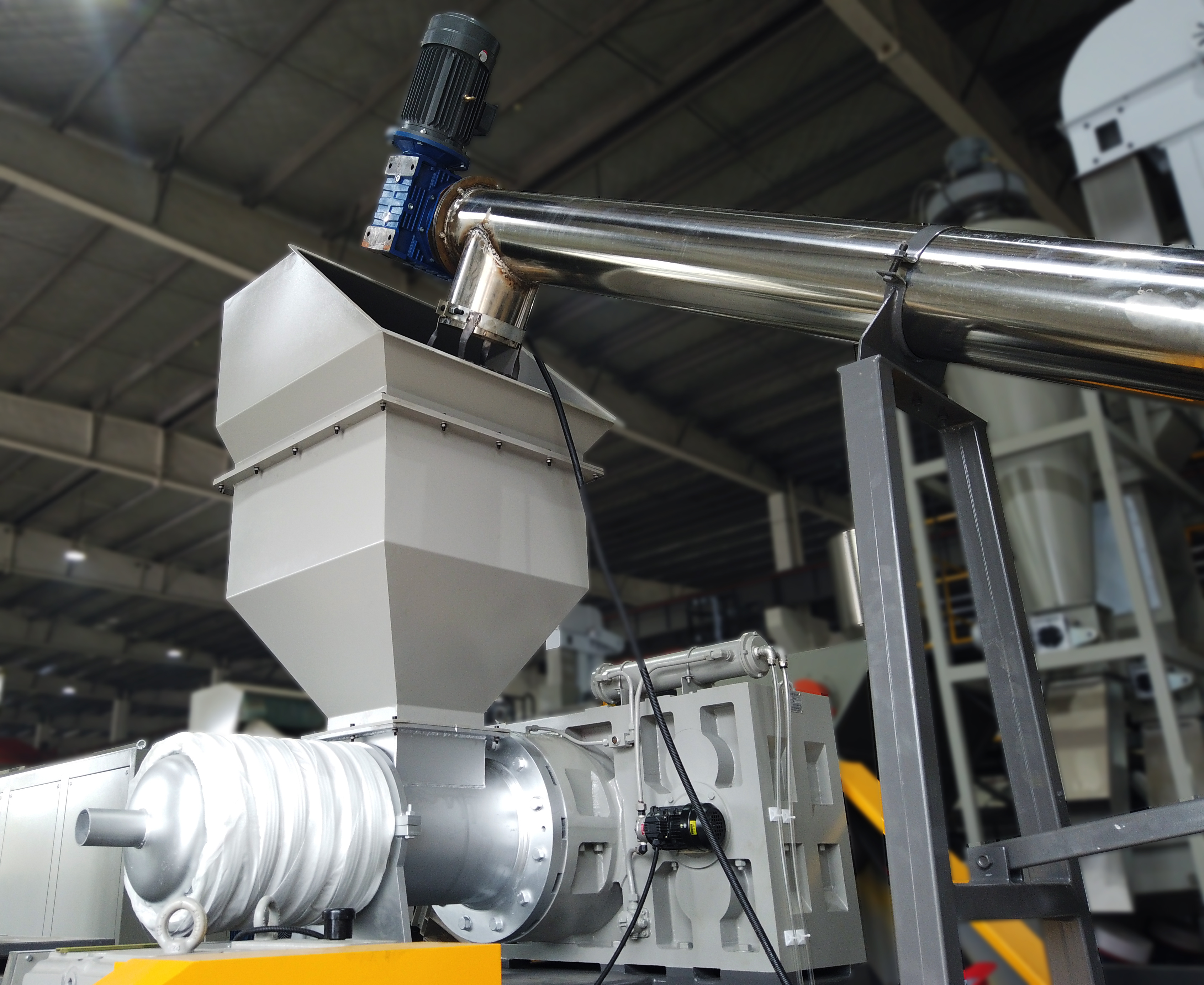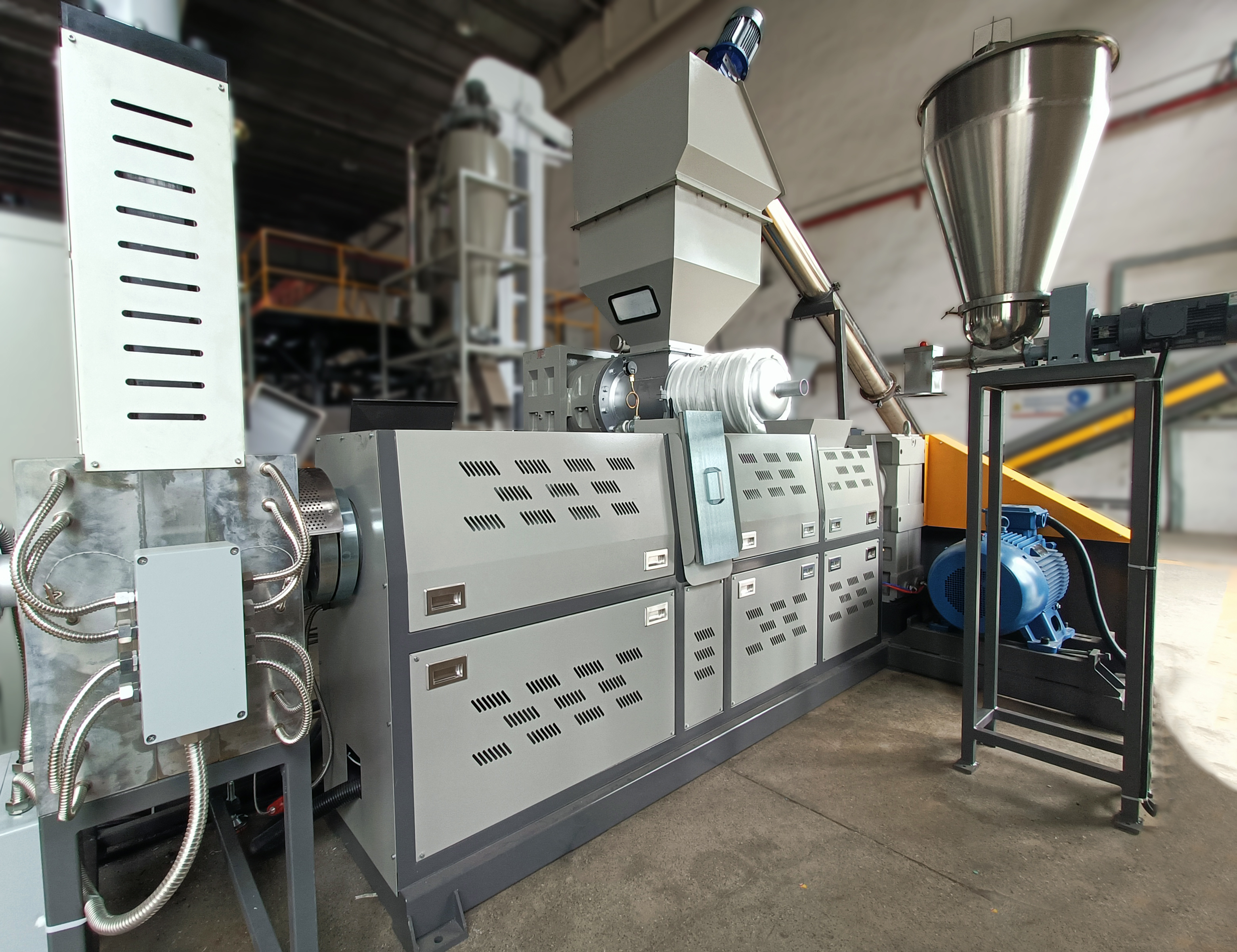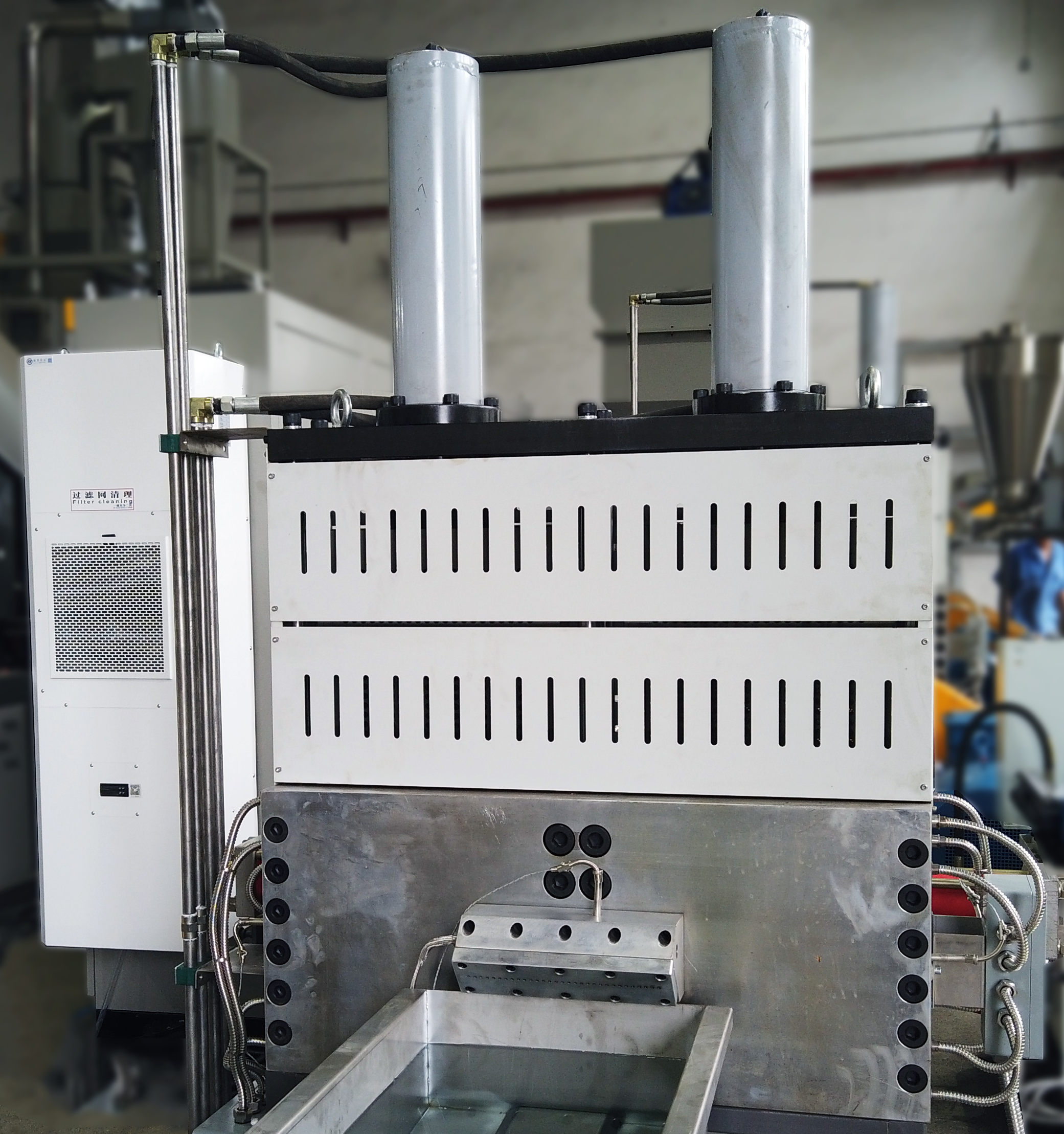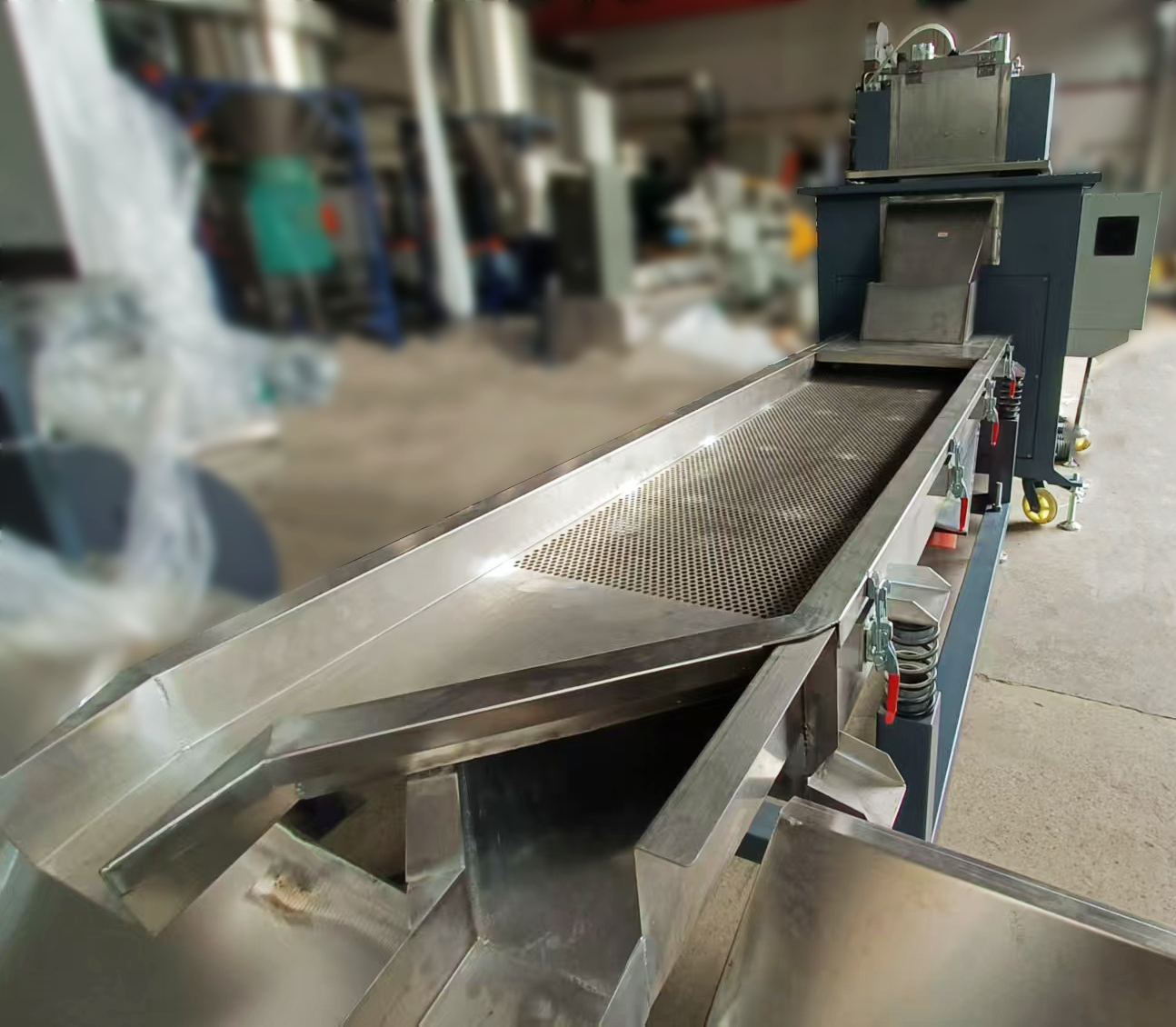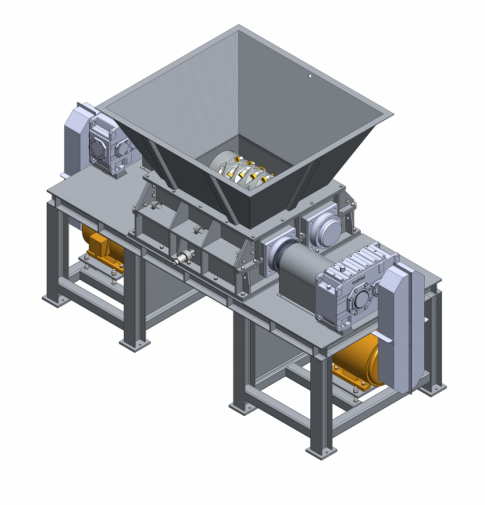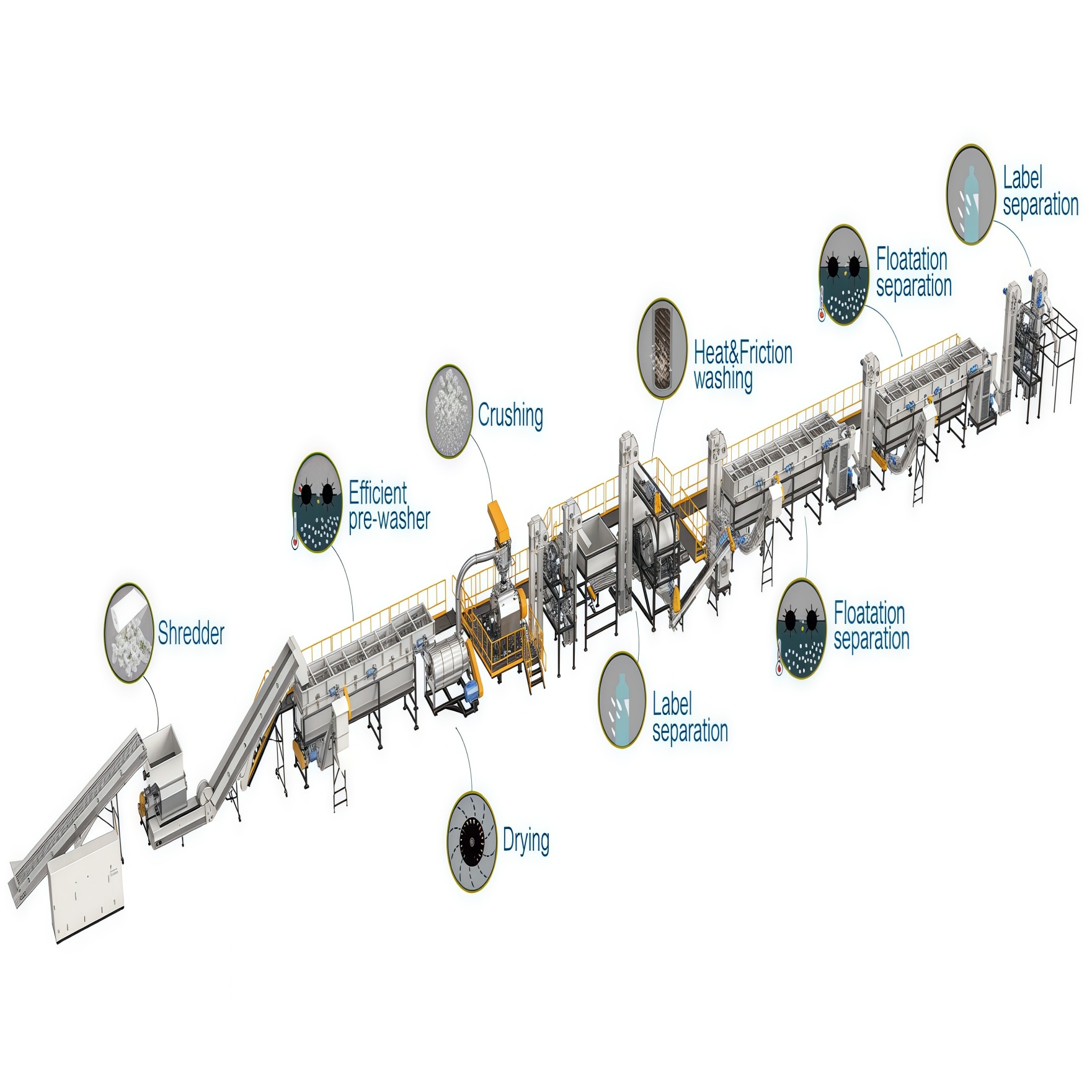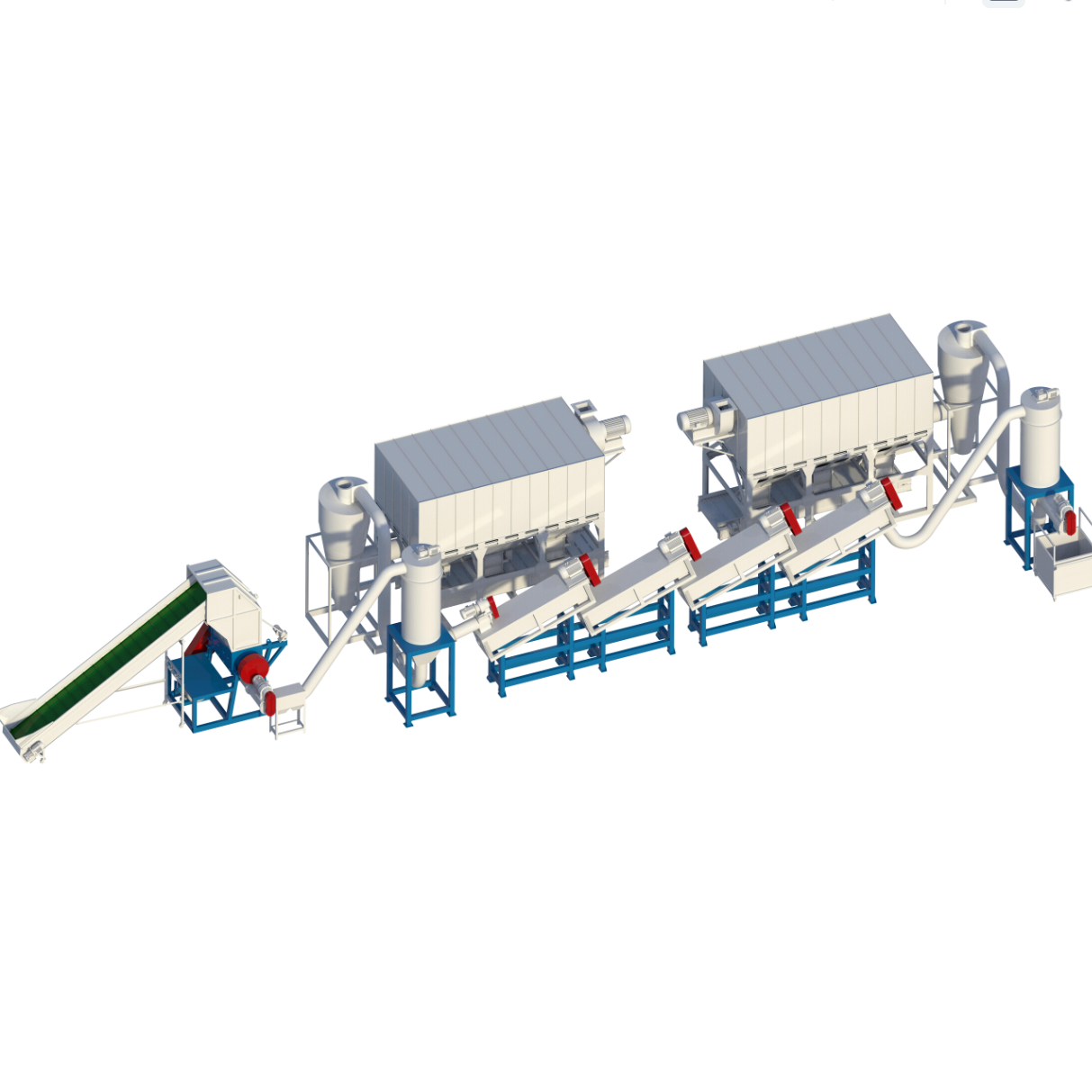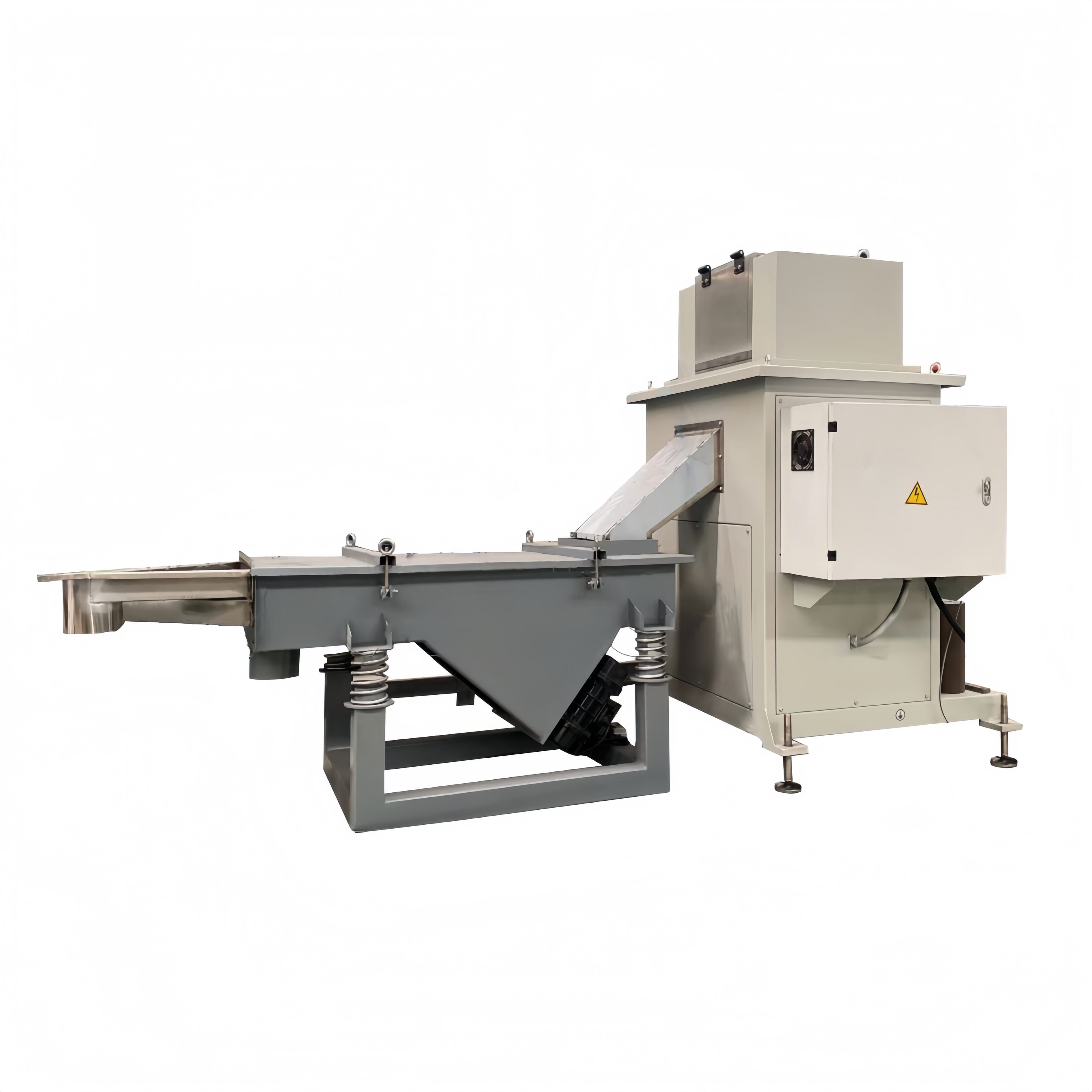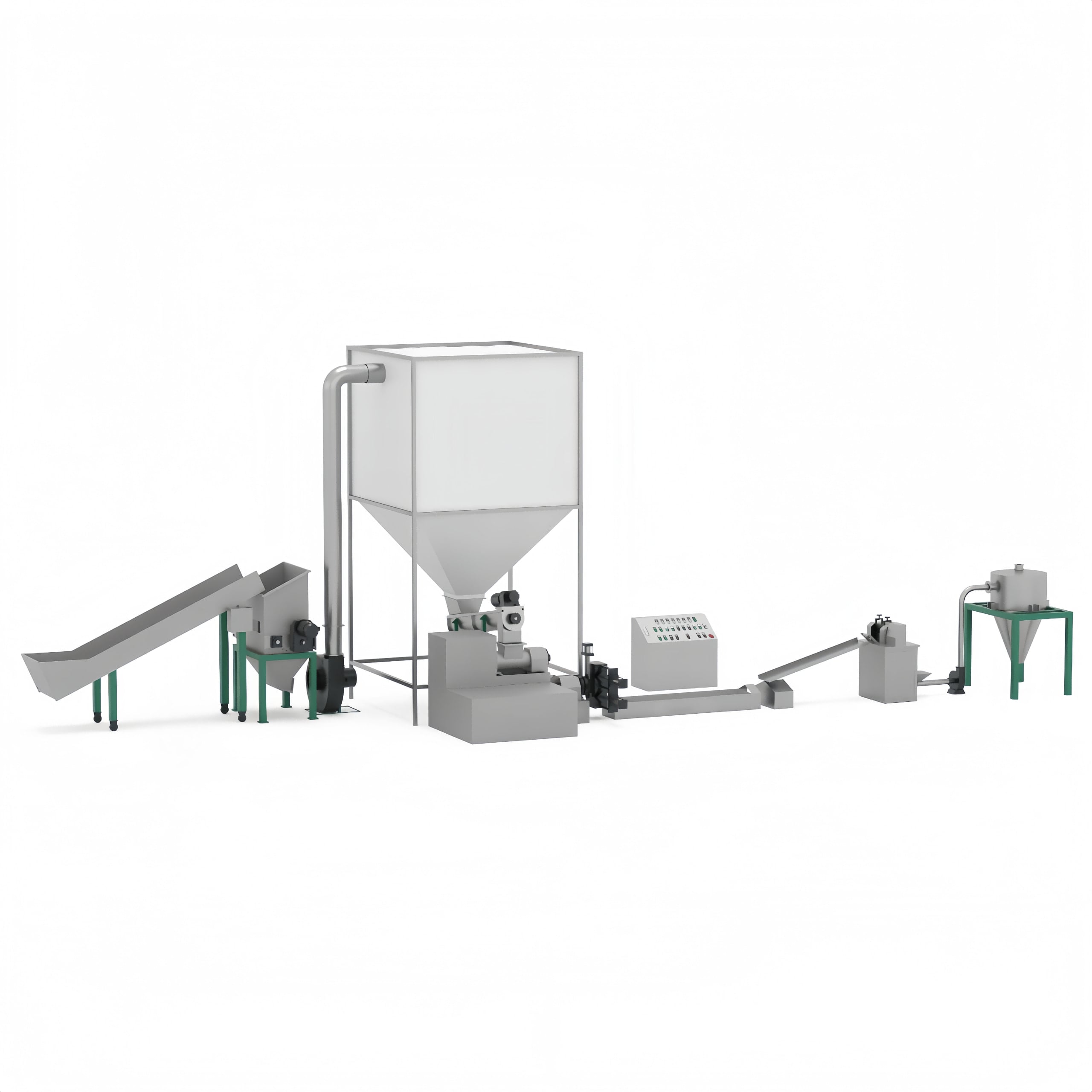
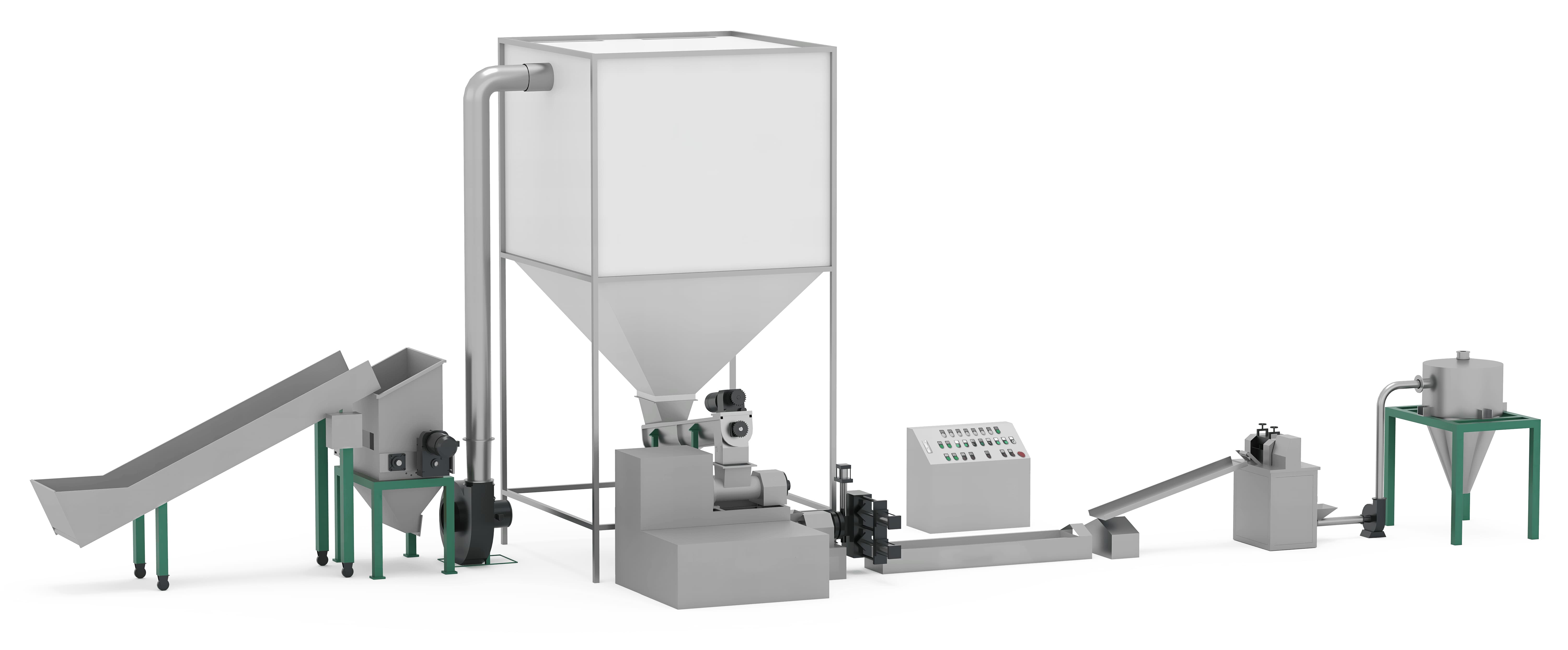
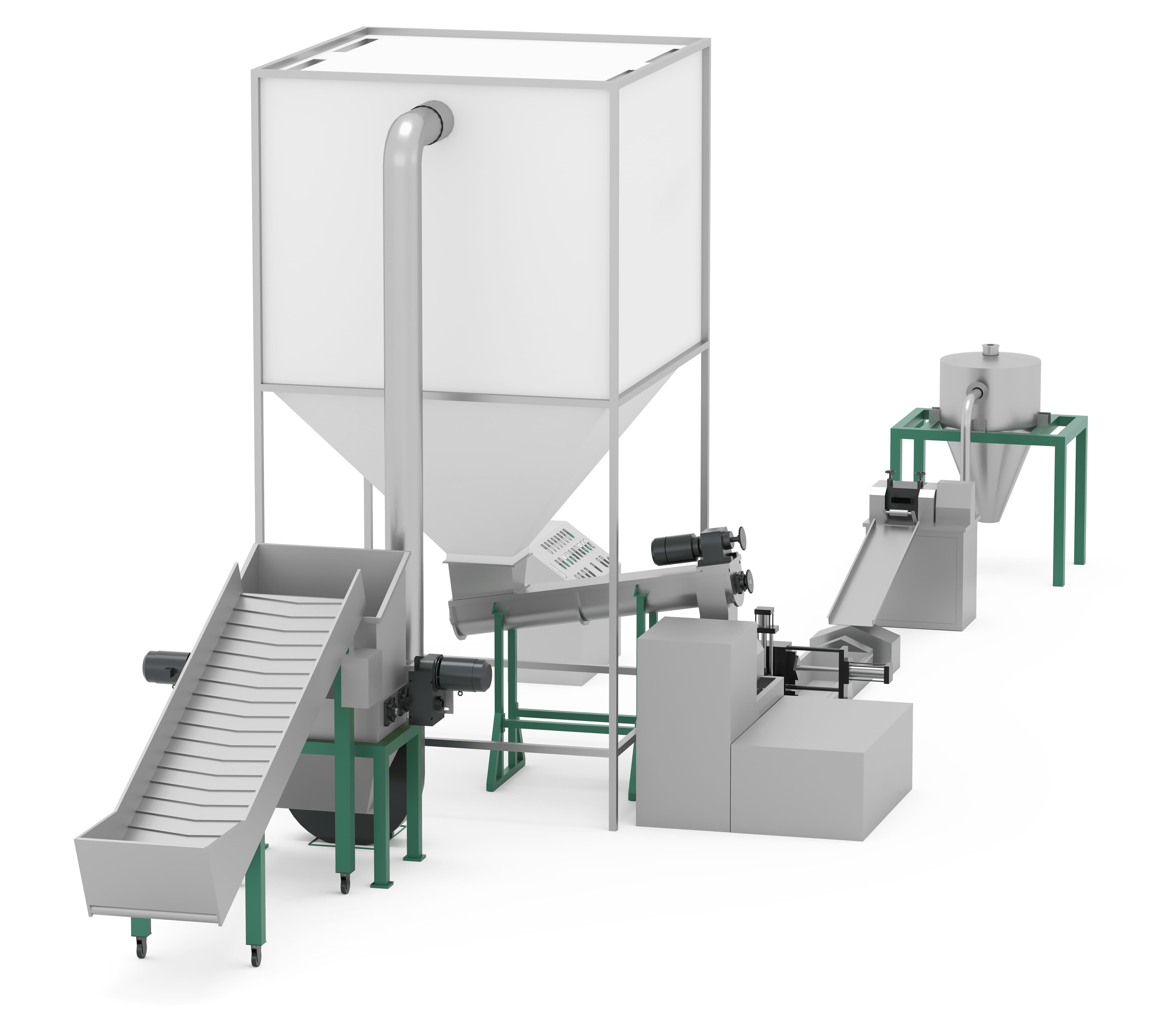
In the era of environmental protection and resource recycling, the EPS loose material granulation line created by Polytec Machine has become a shining star in the field of recycling and regeneration of foam EPS materials with its innovative design and excellent performance. It accurately locates the problem of handling buffer materials of waste packaging boxes and provides a breakthrough solution for the industry.
 |
 |
| Model | EPS230 | EPS240 | EPS280 | EPS300 |
| Capacity(kg/h) | 200-300 | 400-500 | 600-700 | 800-1000 |
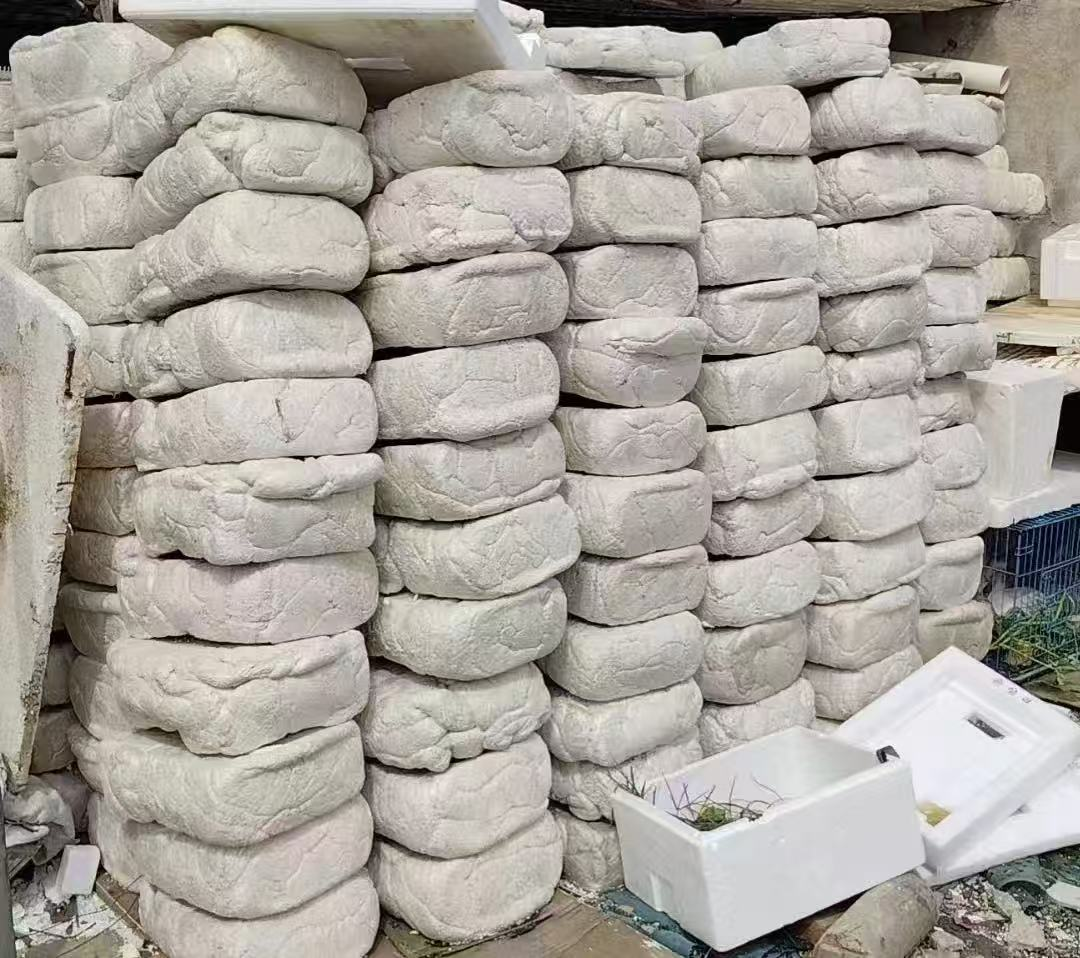
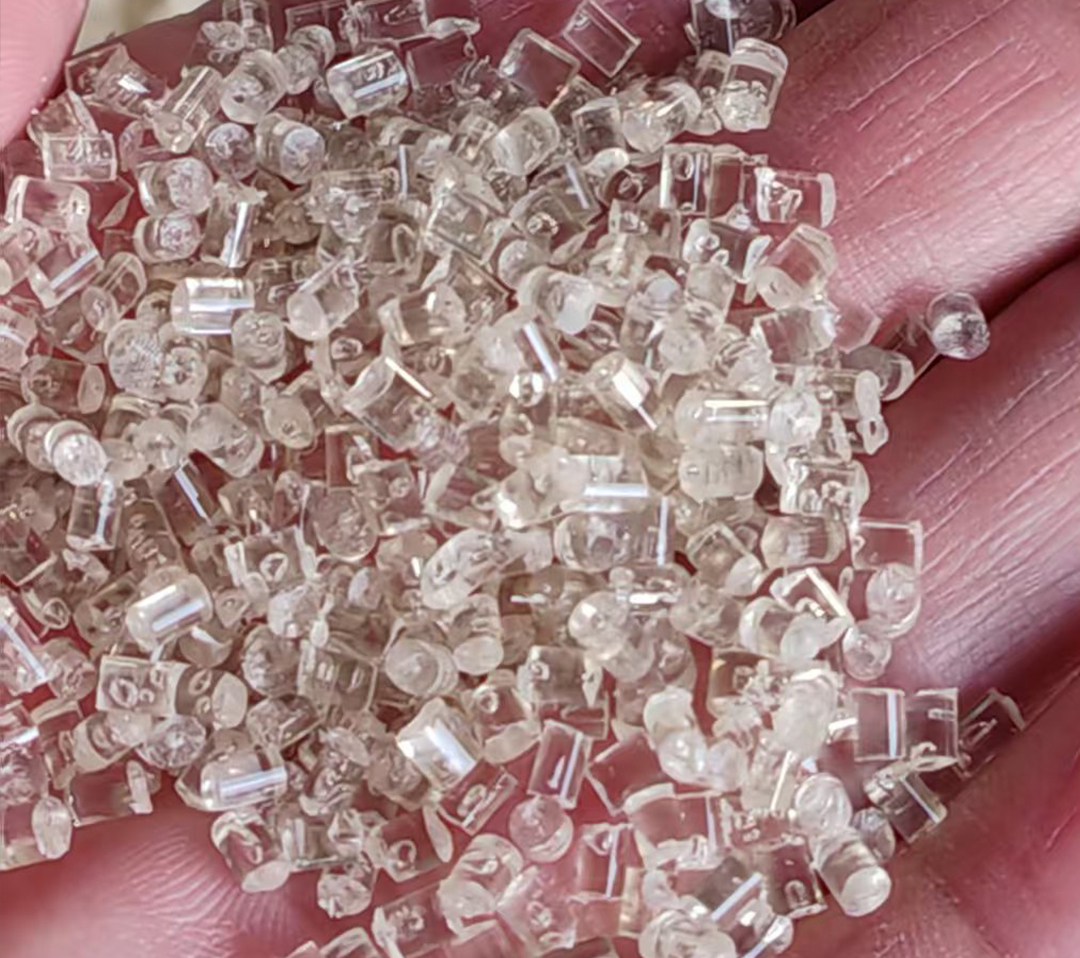
In the era of environmental protection and resource recycling, Polytec Machine's EPS loose-material granulation line has become a standout in foam-EPS recycling. With its innovative design and proven performance, it directly addresses the challenge of handling bulky waste packaging foams and delivers a genuine breakthrough for the industry. The line functions as a compact "resource-conversion factory," integrating pretreatment, melting, filtration, extrusion, and pelletizing in one streamlined workflow. It takes waste EPS foam as feedstock and, through the close coordination of every stage, transforms it into high-quality recycled pellets — proof that resource rebirth and industrial sustainability can go hand in hand.
These recycled pellets open new value across multiple industries: in furniture and home-appliance packaging, they return as reliable buffer protection; in seafood cold-chain logistics, they keep playing their role in insulation and freshness; and in building materials, they inject fresh momentum into the development of greener construction products. Polytec Machine's EPS granulation line — with its distinctive capabilities and broad application prospects — is leading the new wave of EPS waste recycling and building a solid bridge to greener industry.
Higher feeding density. A core advantage of the line is its optimized crushing system. EPS foam is naturally low in density, and conventional processing struggles to feed the material uniformly — which in turn destabilizes the whole line. Polytec Machine's optimized crusher breaks down loose EPS into a more consistent feed, lifting the effective feeding density for the downstream stages. The result: smoother production, lower risk of equipment failure from uneven feeding, and a stable, repeatable output of high-quality recycled pellets.
Unit No. |
Item |
Qty (set) |
1 |
Belt conveyor with non-stop steel separator |
1 |
2 |
PTC single-screw extruder
|
1 |
2.1 |
Masterbatch dosing feeder |
1 |
3 |
PTC single-screw extruder
|
1 |
4 |
Filter
|
1 |
5 |
Water-cooling strand pelletizing system with storage silo
|
1 |
6 |
Electric control cabinet with PLC controller |
1 |
Inconsistent brand name — "Polytec Machine", "Polytec Machinery", and "Baosu Machinery" appear interchangeably. Pick one (likely "Polytec Machine" based on the URL polyretec.com) and use it throughout.
Grammar / punctuation — Several places are missing a space or comma, e.g. "...freshness preservation,in the building materials industry,..." and "Quantity(set)" should be "Quantity (set)".
Table formatting — Item names wrapped at the wrong word ("no-stop steel | separator") due to column width. Use non-breaking spaces or shorter labels.
Vague claims — Phrases like "transforms them into high-quality recycled particles like magic" are stylistic; acceptable for marketing, but pair them with a concrete spec or test result if available.
Repeated "Polytec" — "Polytec Machinery's optimized crushing system ... Polytec Machinery's granulation line ..." in the same paragraph reads heavy. Restructure or use a pronoun.

Suzhou Polytec Machine Co LTD delivers high-quality, customized waste plastic recycling systems. Our advanced technology and expert service optimize efficiency and sustainability for global clients.
Zhangjiagang City(Nearby Shanghai City ,One Hour By Train) ,Jiangsu Province,China 215621
Copyright © 2026 Suzhou Polytec Machine Co LTD . All rights reserved. Privacy Policy

 EN
EN